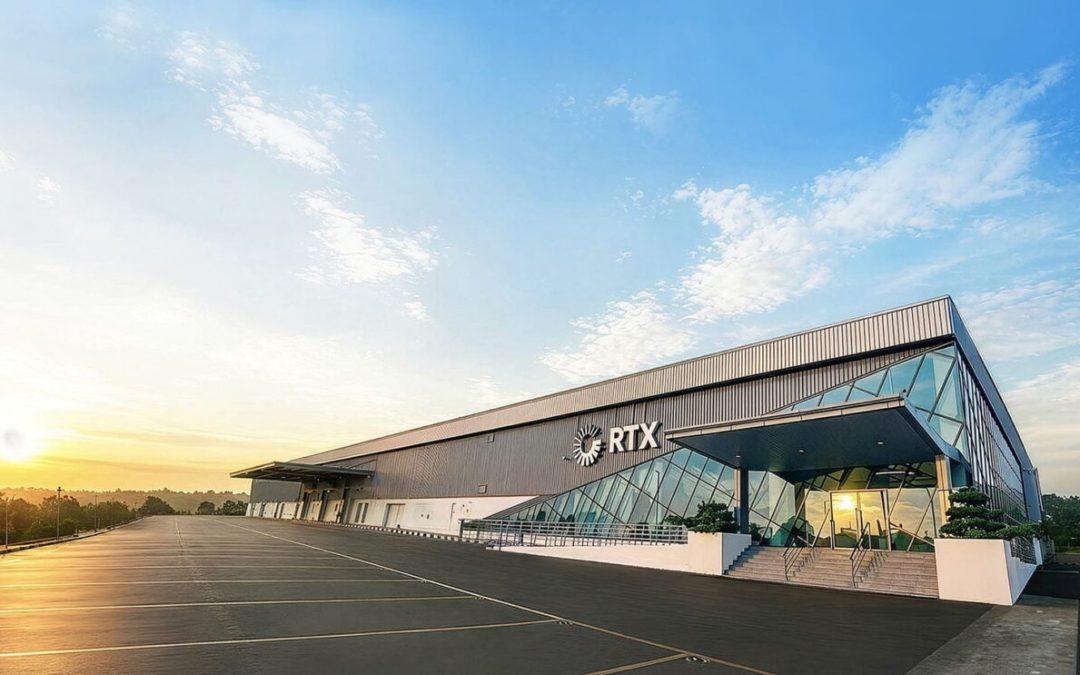
This month, Collins Aerospace announced a $63 million investment to expand its aerospace maintenance, repair and manufacturing capability in Malaysia. The expansion introduces a range of advanced manufacturing technologies, including:
- Autonomous mobile robots (AMRs)
- Digital production management systems
- Real-time asset tracking
- Smart factory technologies
- Expanded repair capability for next-generation aircraft components
This investment is another clear signal of the direction in which the global aerospace industry is moving. Across both manufacturing and MRO (Maintenance, Repair and Overhaul), leading aerospace companies are accelerating the adoption of Industry 4.0 technologies to improve productivity, traceability, quality and operational resilience. Automation is increasingly being used not simply to reduce costs, but to address skilled labour shortages, increase production flexibility, improve data-driven decision making and deliver the levels of quality and repeatability demanded by modern aerospace programmes.
The integration of autonomous robotics, connected production systems and real-time digital monitoring also reflects a broader shift towards intelligent manufacturing environments, where data is used continuously to optimise production, predict maintenance requirements and improve supply chain visibility. As next-generation aircraft incorporate more advanced materials, electronics and propulsion technologies, manufacturing and repair processes must evolve alongside them.
For members of the Engineering & Aerospace Cluster (EAG), this announcement reinforces several strategic priorities that are already shaping Ireland’s aerospace ecosystem. Continued investment in automation, digital manufacturing, advanced machining, additive manufacturing and smart production systems will be essential to remaining competitive within global aerospace supply chains. Equally important is maintaining the highest levels of quality assurance through internationally recognised standards such as AS9100, alongside developing collaborative supply chain capabilities that enable companies to deliver increasingly complex, high-value work.
The announcement also underlines the importance of workforce development. As aerospace manufacturing becomes more digitally integrated, demand will continue to grow for skills in robotics, industrial automation, digital engineering, data analytics and advanced manufacturing technologies. Supporting these capabilities across industry and education will be critical to maintaining Ireland’s competitiveness over the coming decade.
While the investment is taking place in Malaysia, its significance extends well beyond the region. Collins Aerospace operates a highly integrated global manufacturing and MRO network, with centres of excellence located around the world. Ireland, particularly Shannon, plays a strategically important role within that network as Collins Aerospace’s global centre for repair, electrical overhaul, design-approved repairs and engineering support. Developments within one part of the organisation often influence future operational models, technology adoption and capability development across the wider global business.
For Ireland’s aerospace sector, the announcement provides both validation and opportunity. It demonstrates that the technologies defining the future of aerospace manufacturing are no longer emerging concepts; they are becoming standard operational practice. Companies that invest today in digitalisation, automation, advanced quality systems and collaborative innovation will be best positioned to secure future programmes and strengthen Ireland’s position as a trusted, high-value partner within the global aerospace industry.
